This project began with a clear purpose: to make mobility more accessible.
It explores the design of a functional, personalized, and low-cost transtibial prosthetic system, developed through a user-centered and participatory approach. By working closely with a real user, comfort, fit, and usability became the foundation of the design, ensuring a solution grounded in real needs and everyday use.
Role
Product design and Prototype
Area
Product design
Year
2025
Deliverables
Biomechanical analysis
3D limb scanning
3D modeling and rendering
Technical drawings
Prototype
01
biomechanics.
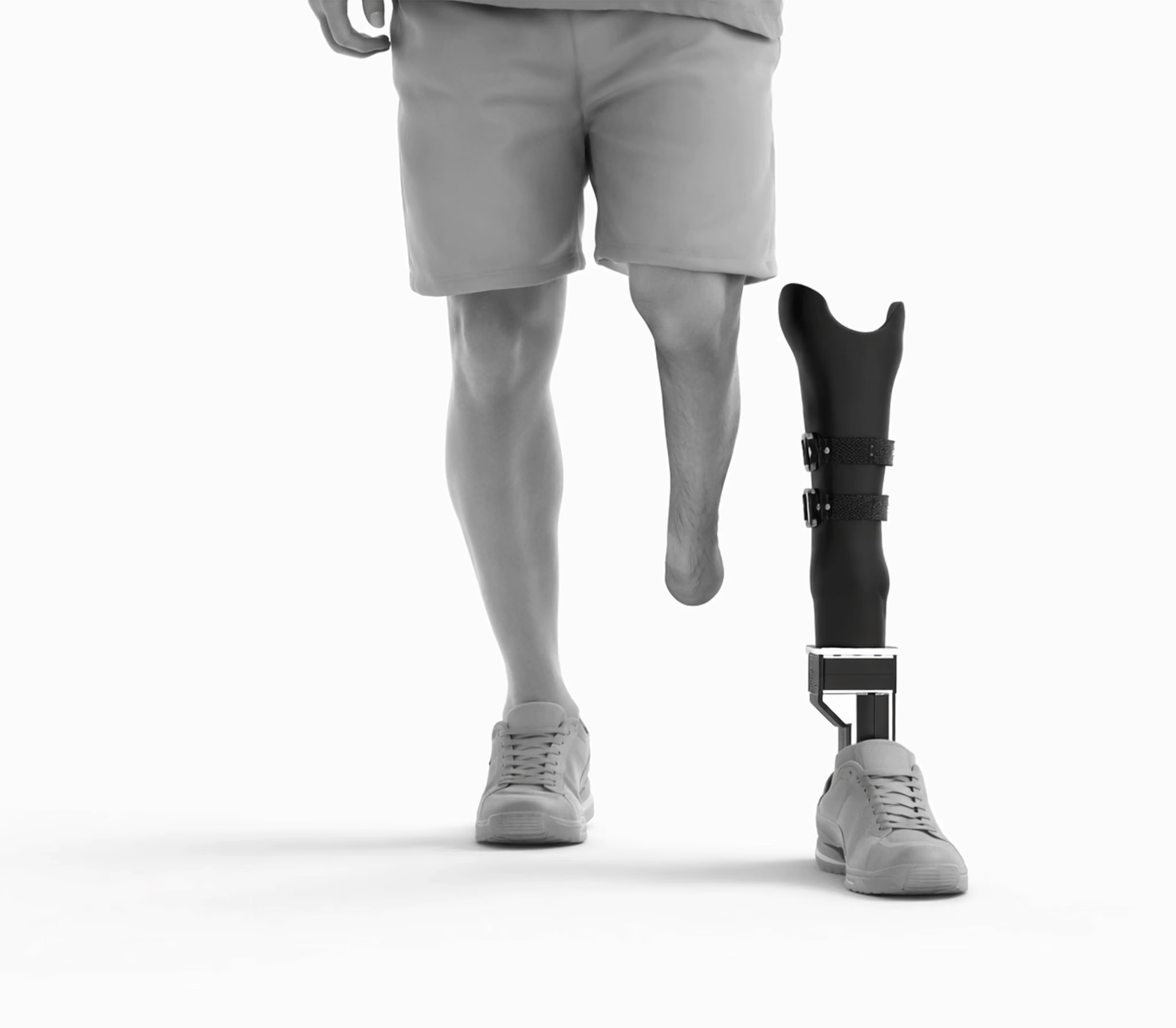
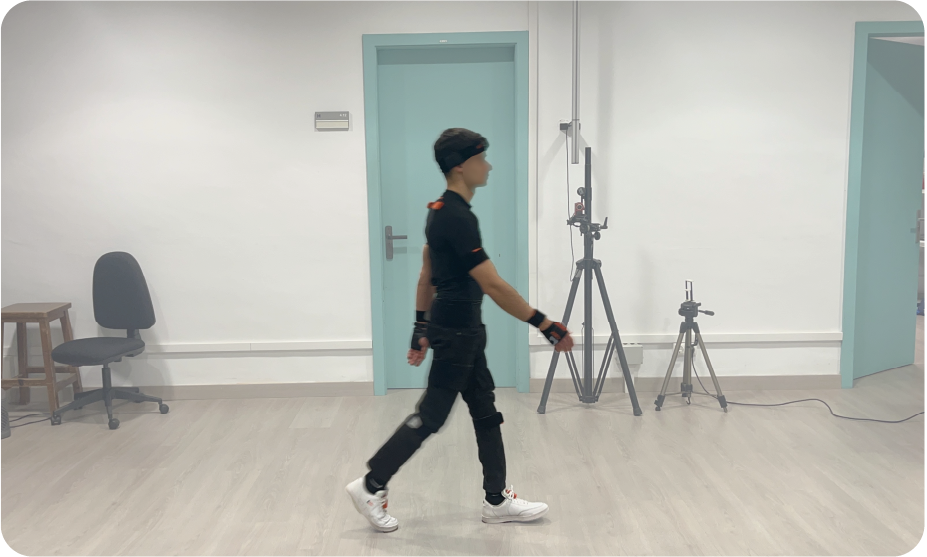
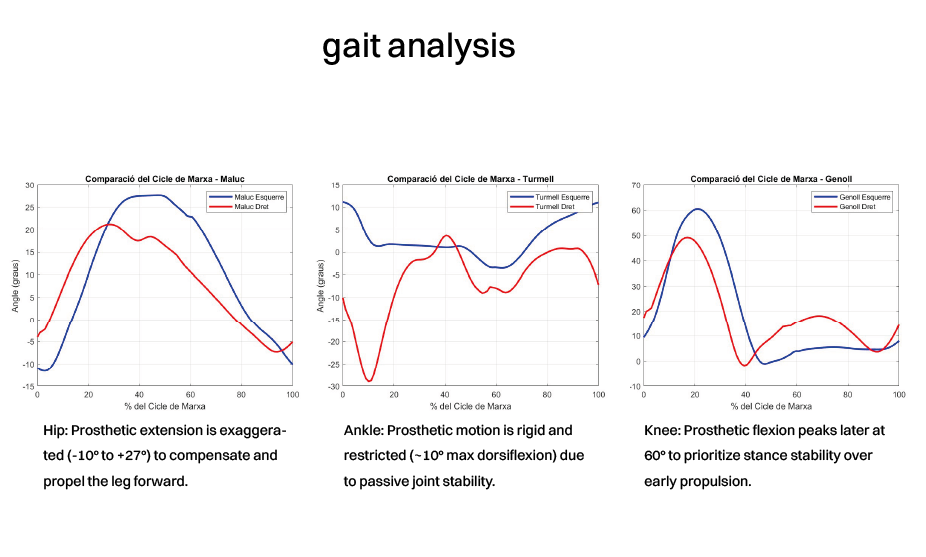
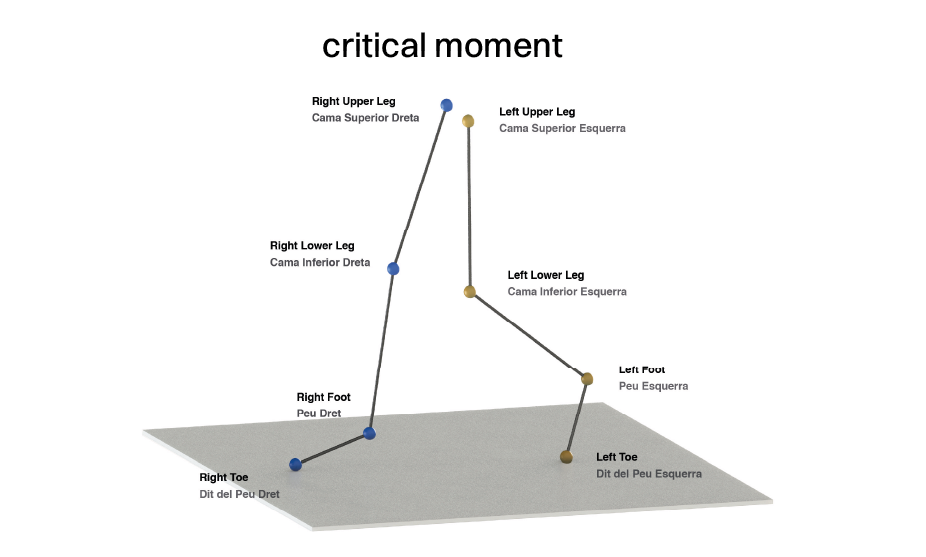
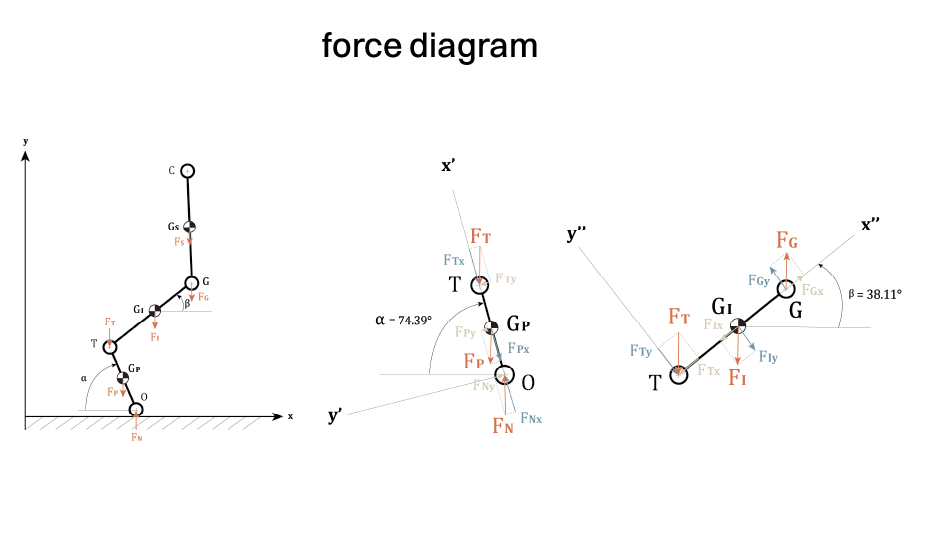
User gait was analyzed in a biomechanics lab using 18 IMU sensors to capture 3D motion. A representative gait cycle was modeled with 3D body markers, allowing calculation of forces and moments to assess the user’s biomechanical demands, and comparison between prosthetic and sound limbs.
02
socket.
challenge
Traditional pin-anchored sockets—the custom-molded interface connecting the residual limb to the frame—often create painful pressure points and skin chafing. Eliminating mechanical pins requires a close-fitting geometry for uniform load distribution, but the wider heel area prevents direct insertion into a rigid, fully closed design.
solution
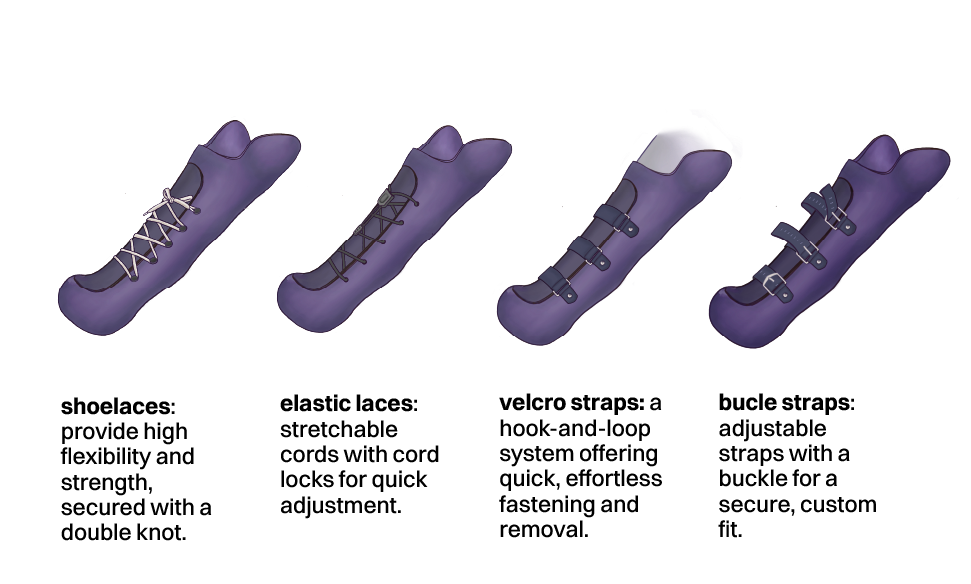
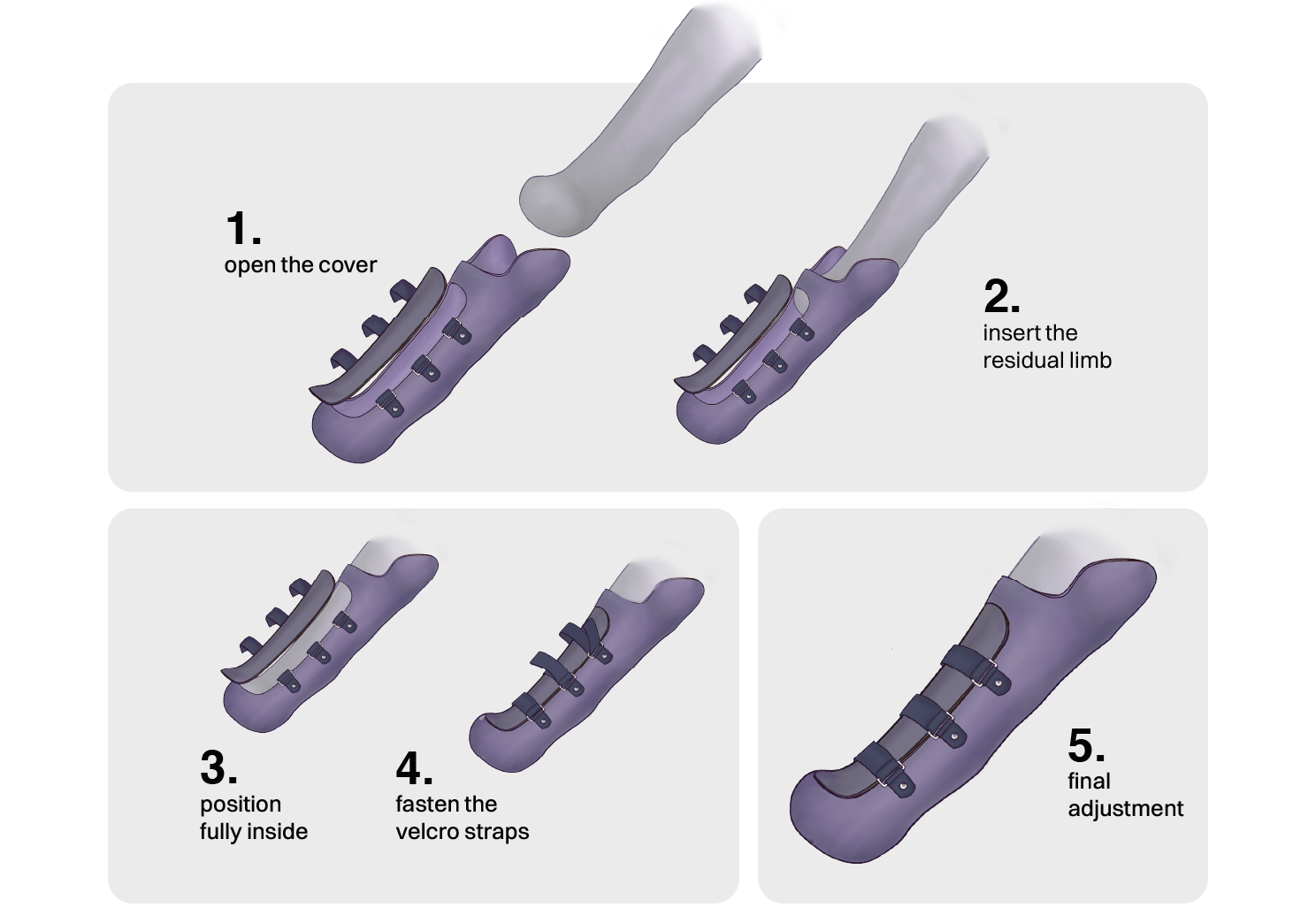
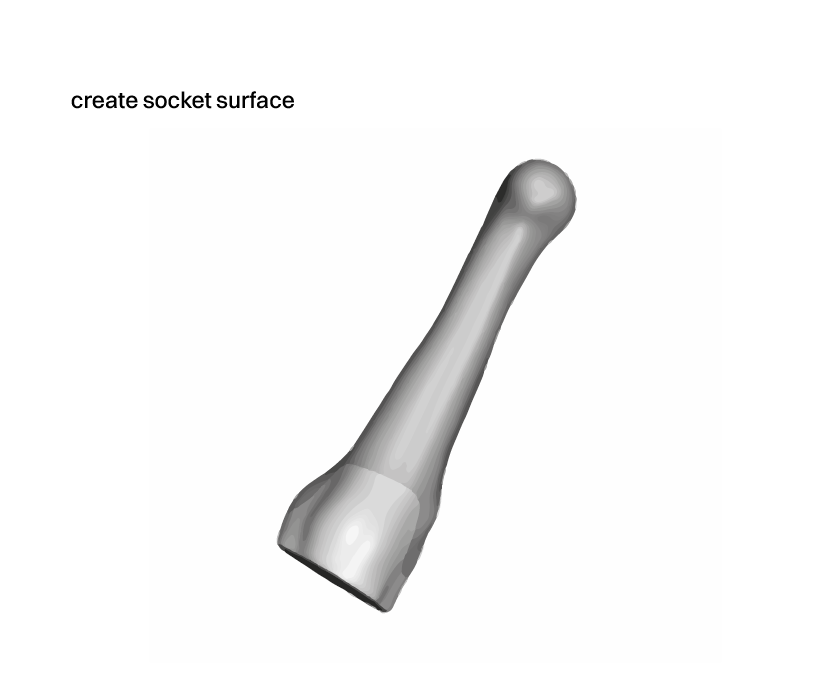
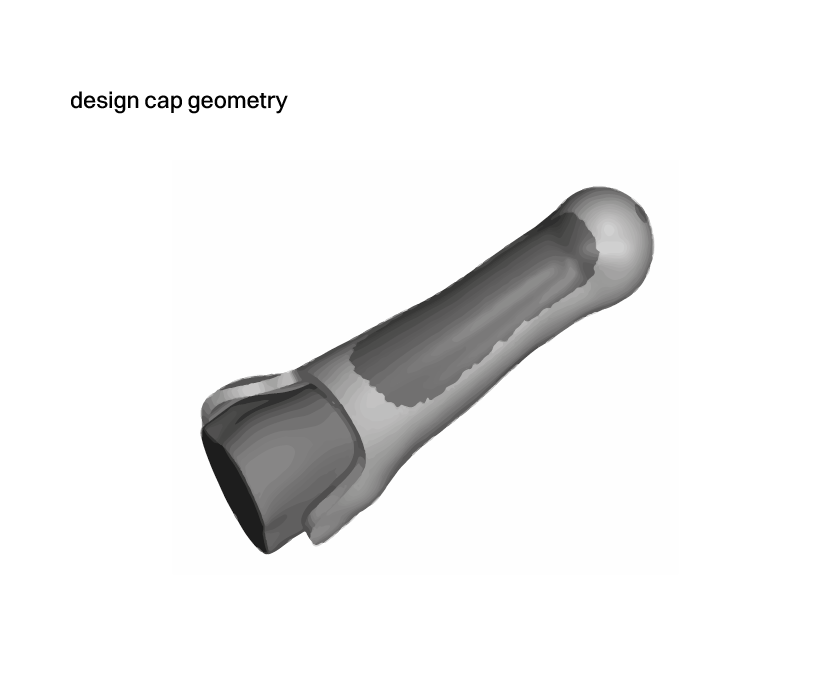
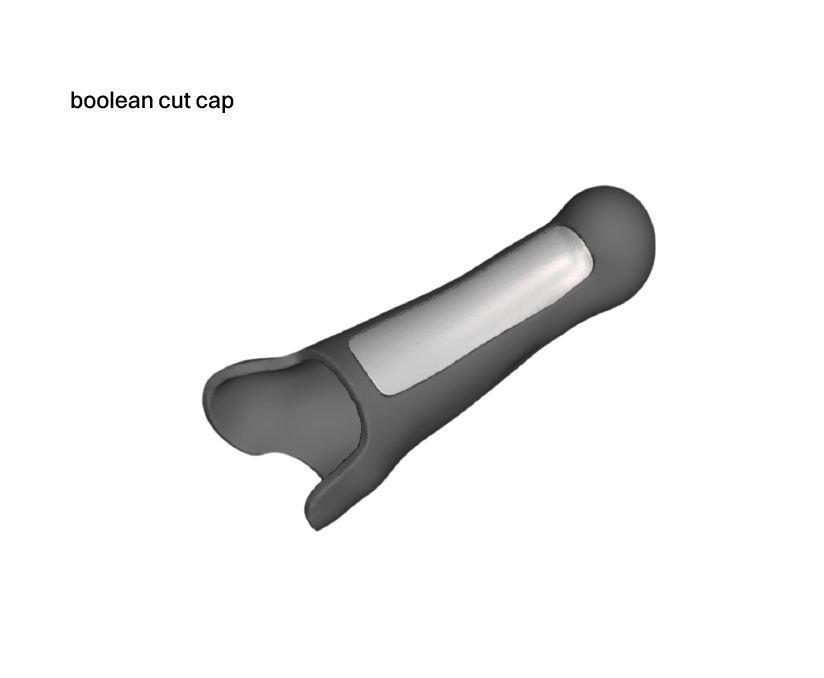
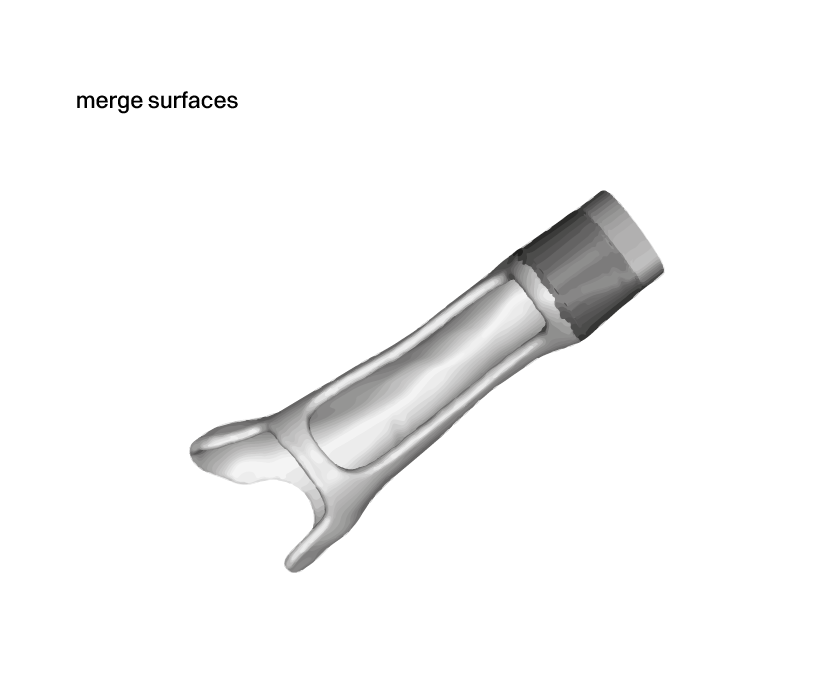
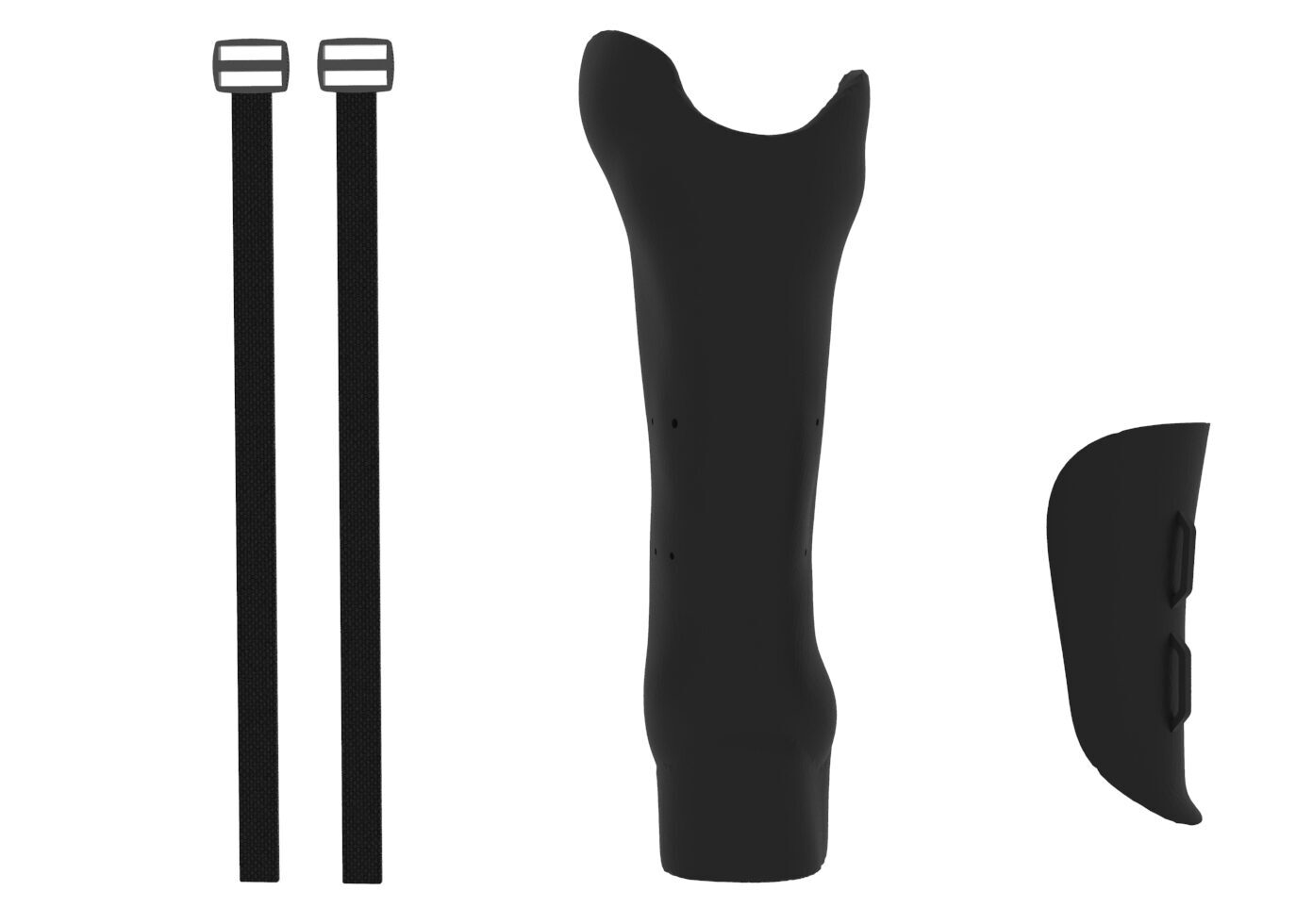
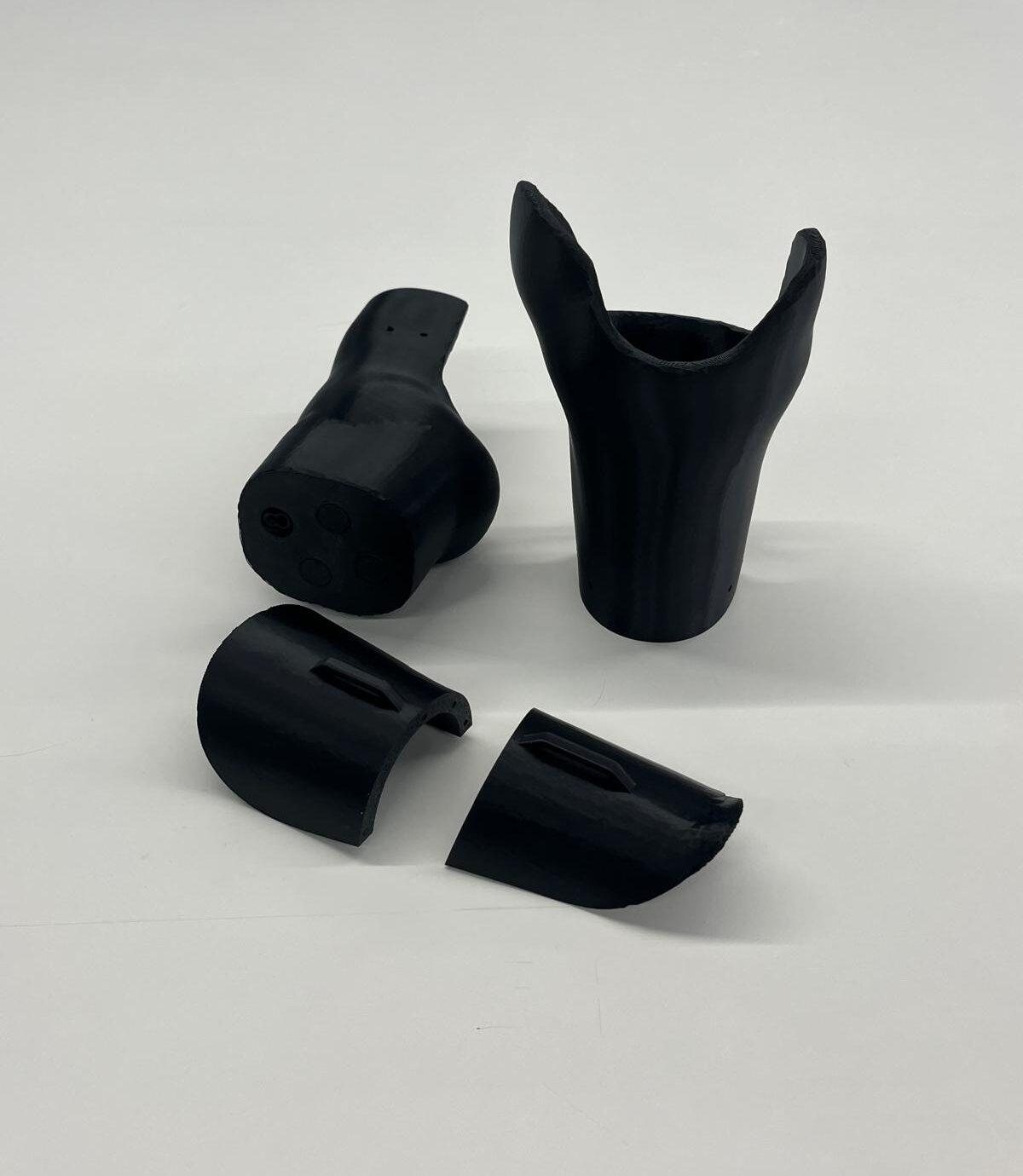
A pinless split-socket featuring a rear window allows the wider heel to pass through easily during donning. Once the limb is inserted, a custom-fitted cover closes the opening securely using adjustable velcro straps, ensuring a comfortable, uniform fit without sacrificing structural stability.


limb scanning
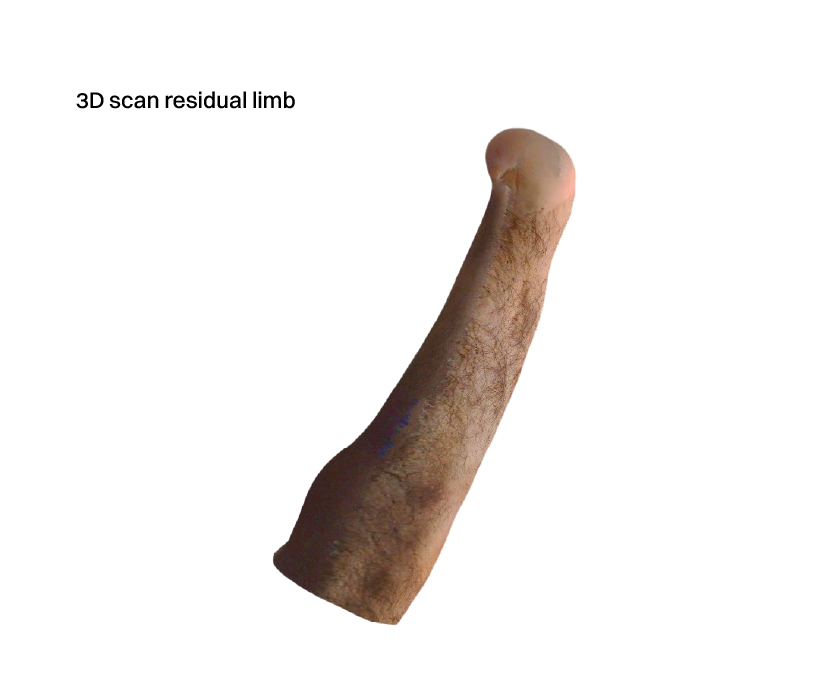
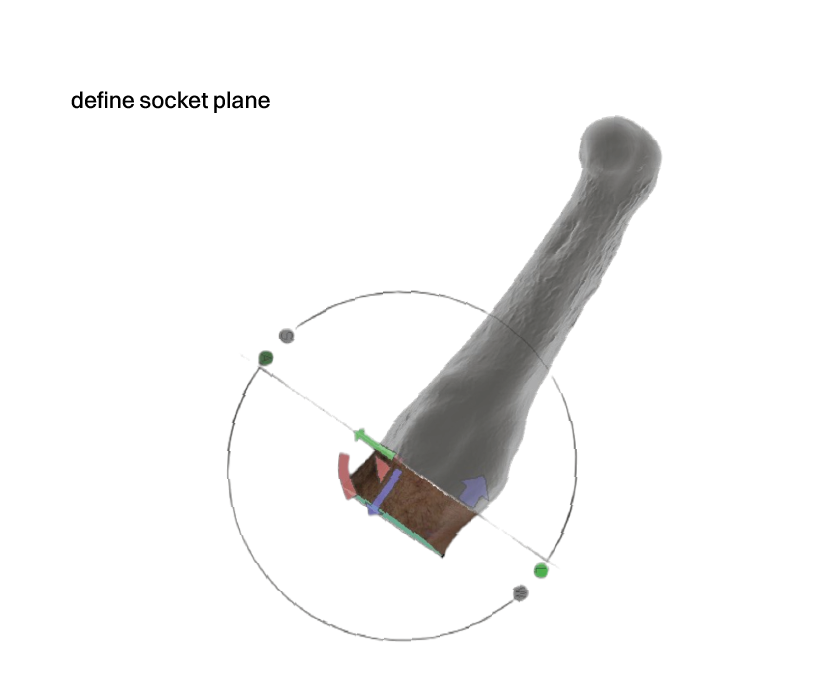
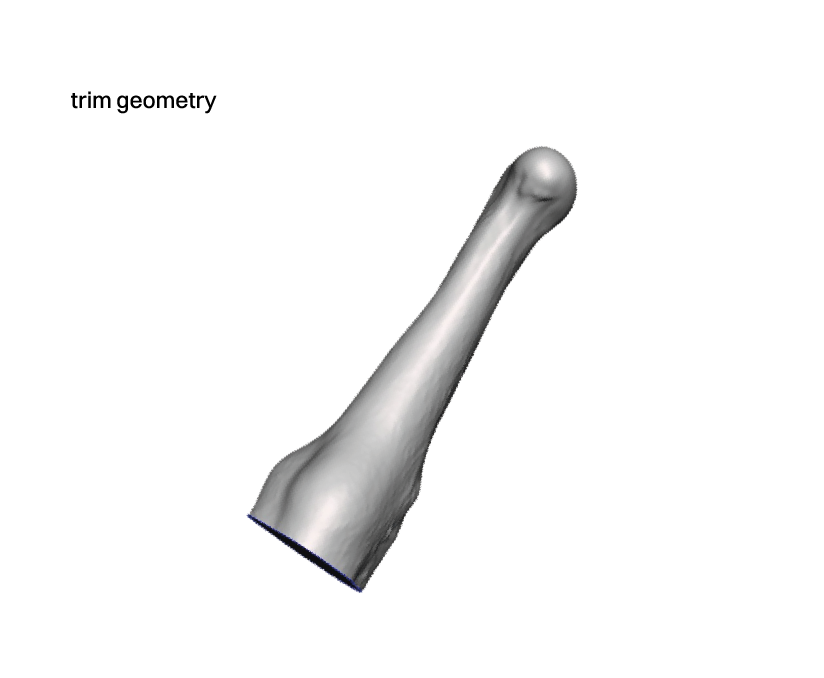
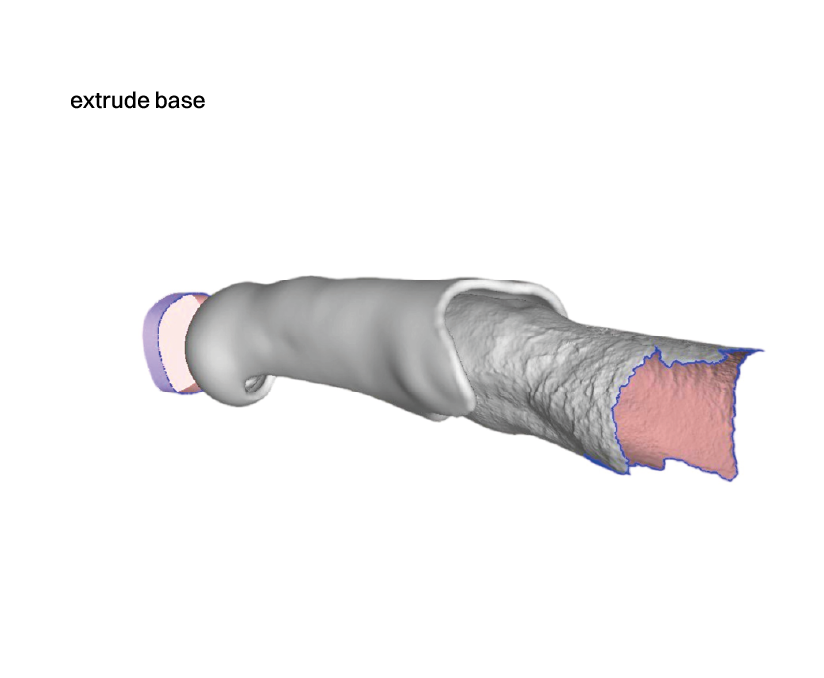
The residual limb was captured in detail using 3D scanning, creating an accurate model for a personalized socket that improves comfort, stability, and fit.




socket design
The assembly consists of three core components: the main split-socket body, the rear closure cover, and the adjustable velcro straps that lock the assembly securely in place.
03
lower leg.
challenge
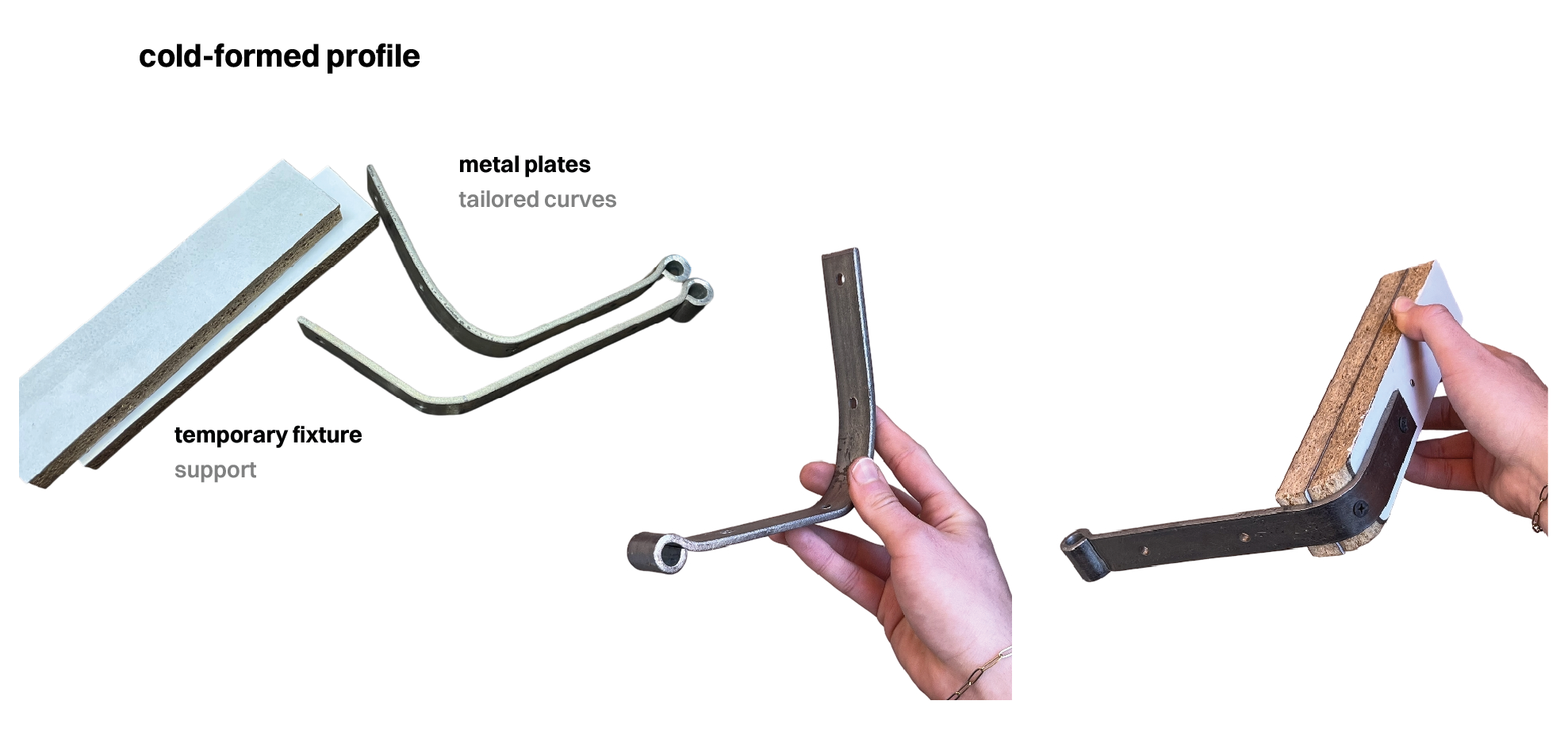
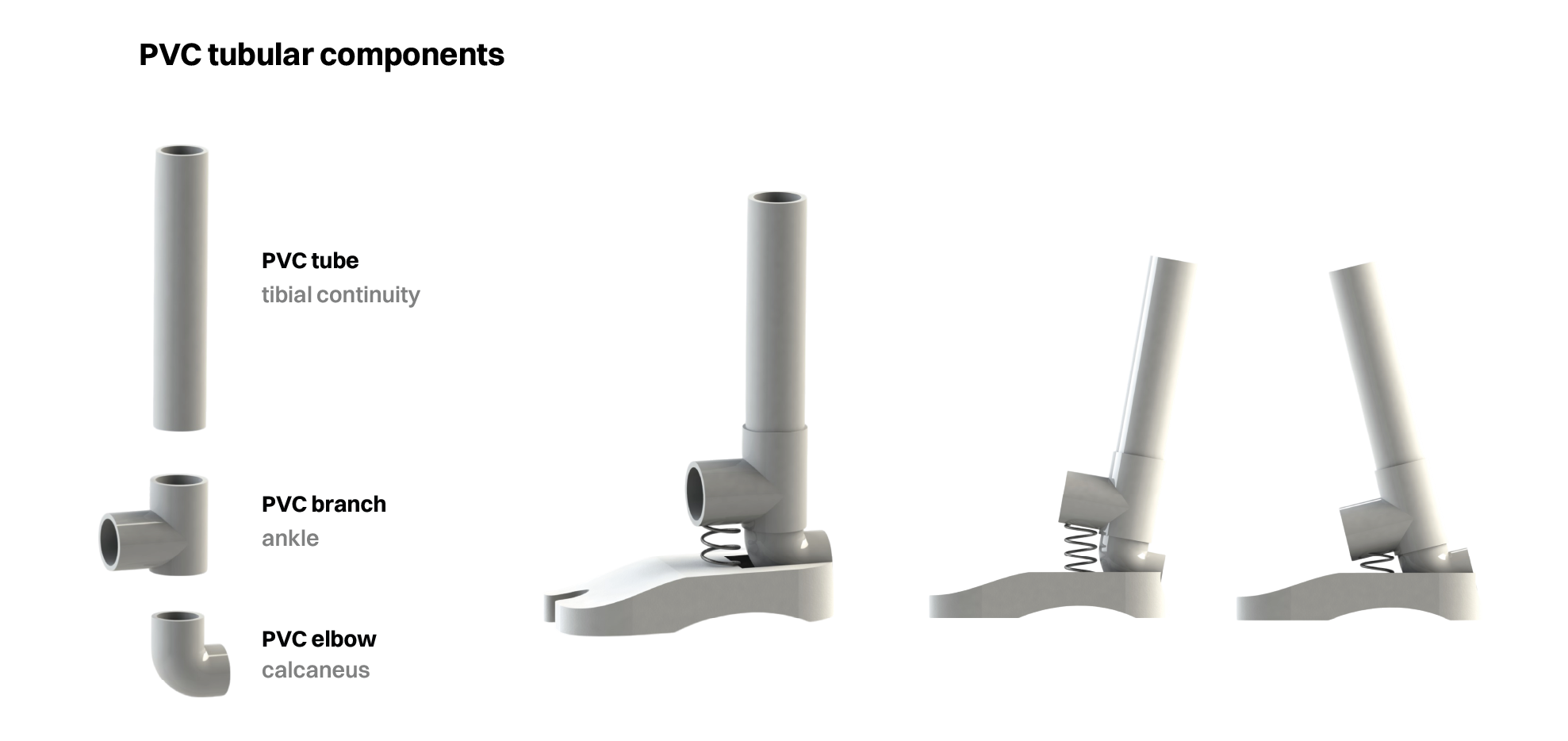
Developing an accessible transtibial prosthesis required eliminating complex, expensive manufacturing without sacrificing structural safety. Initial concepts strictly prioritized local material availability and simple assembly using standard tools, ensuring feasibility in low-resource settings.

solution
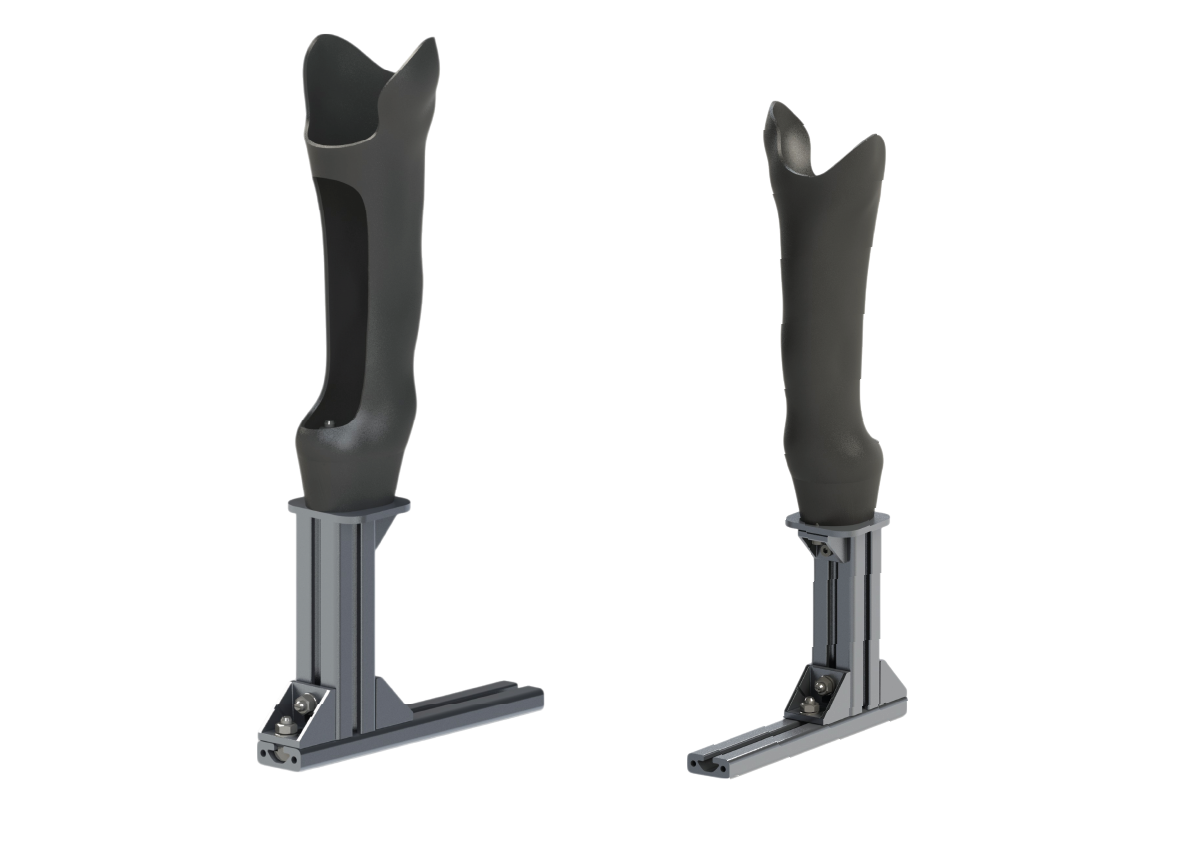
Based on a decision-matrix evaluation balancing durability, strength, rigidity, weight, and cost, the T-slot aluminum profile emerged as the winning structural foundation. To maximize performance, the design was further developed and optimized while maintaining low-cost modularity.


lower leg assembly
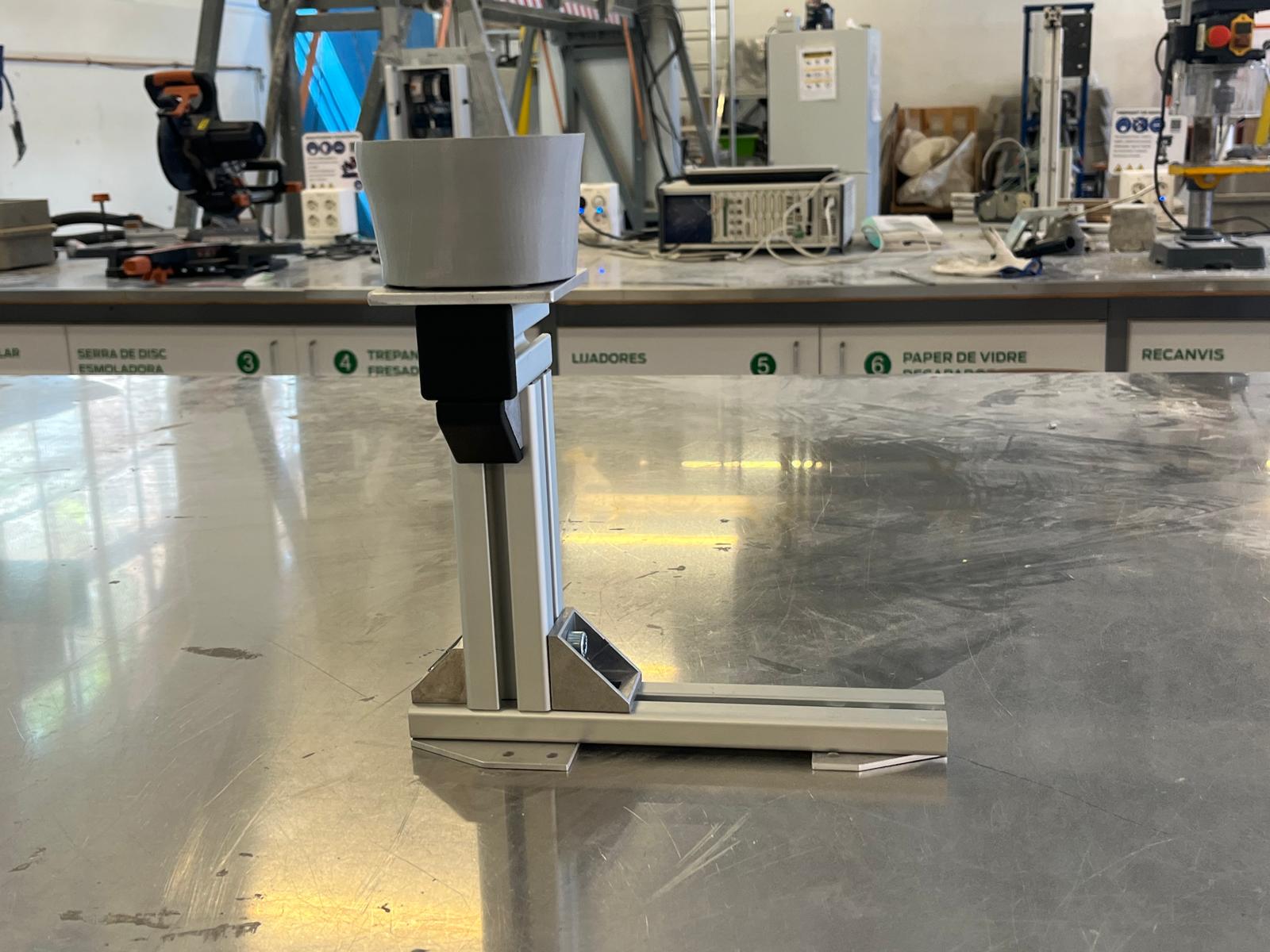
The socket secures directly into the vertical profile’s central T-slot using a flat adapter and an aluminum baseplate to maximize rigidity and stress distribution. To accommodate the socket’s wider footprint, a front angle bracket provides essential structural support. This ensures balanced load transfer, optimal shoe compatibility, and a lightweight, modular mechanical transition.
04
development.
leg alignment
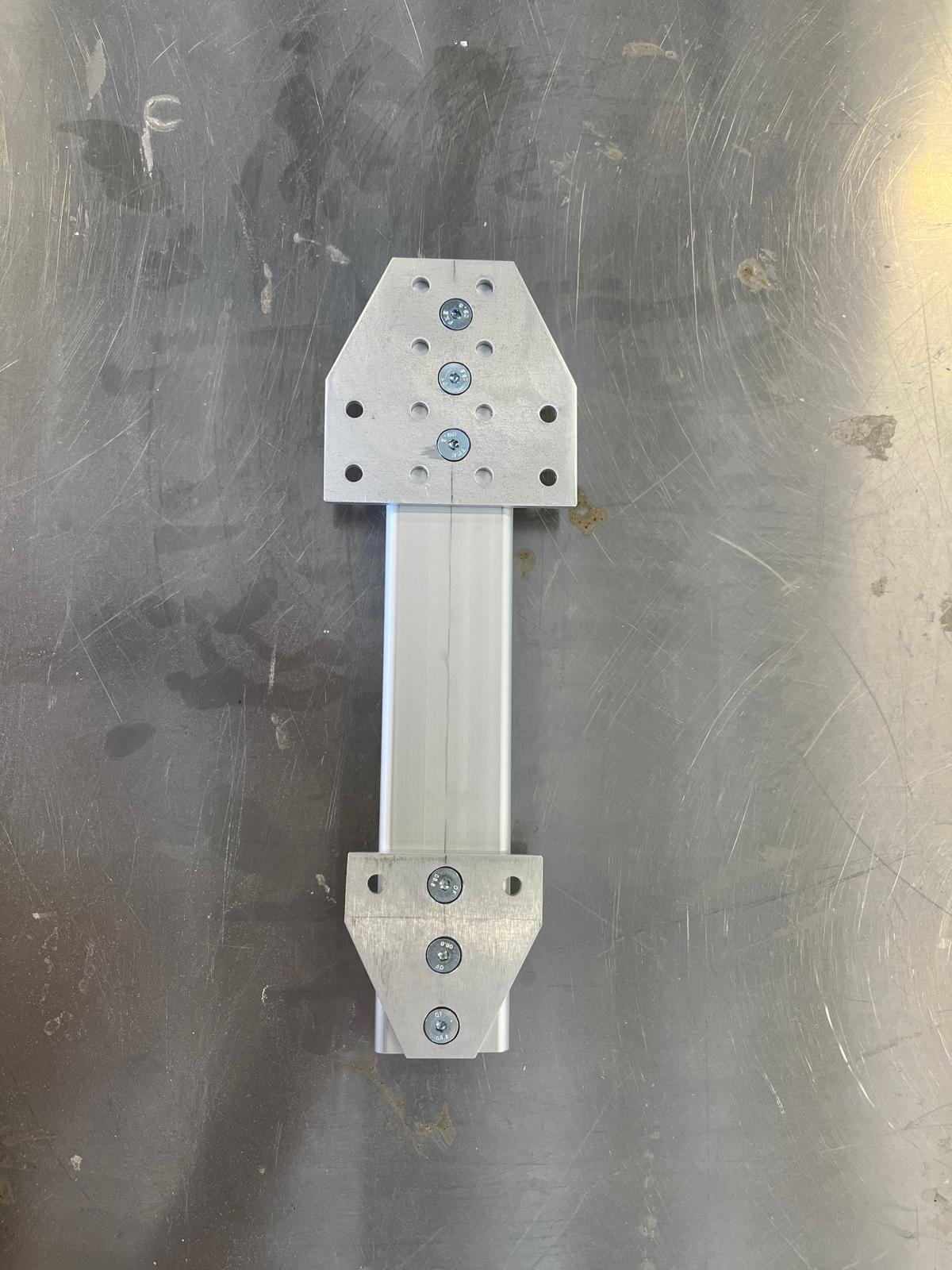
User testing revealed a medial knee and lateral foot alignment deviation, rendering a fixed center socket ineffective. To match real anatomical axes, a perpendicular top profile segment was added to enable continuous horizontal sliding via its side T-slot. The final assembly secures the baseplate to the socket with countersunk screws, then uses T-slot nuts to lock the plate onto the horizontal profile. This creates an adjustable, highly stable interface that easily corrects lateral offset for personalized user fitting.

foot design
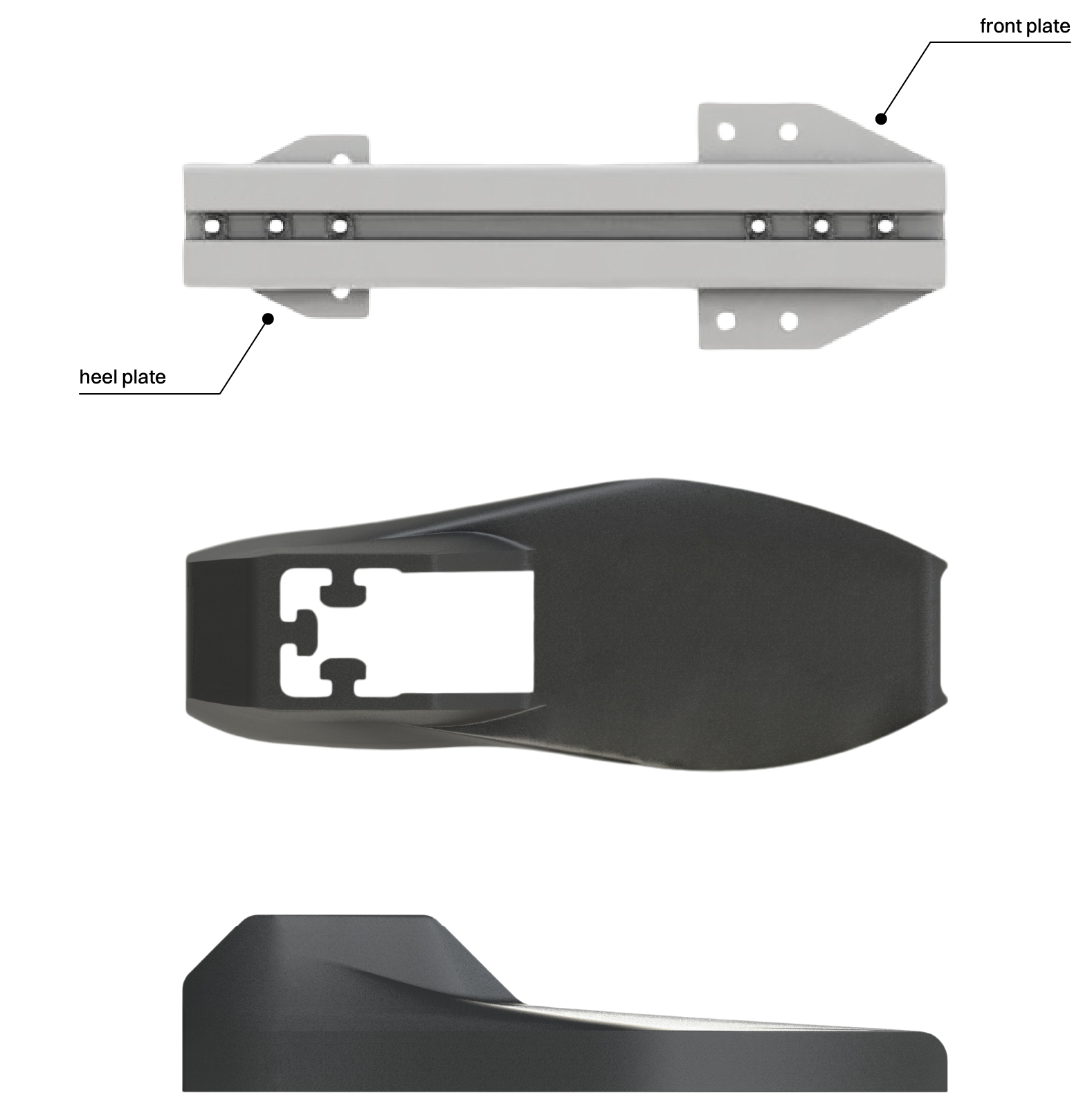
The prosthetic foot is built from modular components scaled to the user’s foot.
base
An aluminum profile with lateral stability plates mimics natural foot geometry, avoiding a flat surface. Replaceable modular plates enhance walking stability and maintain structural rigidity.
cover
The anatomically shaped 3D-printed cover fills the shoe for a snug fit, enhanced comfort, and perceived stability. As a non-structural element, it rests directly on the base profile and plates.
assembly
04
final design.
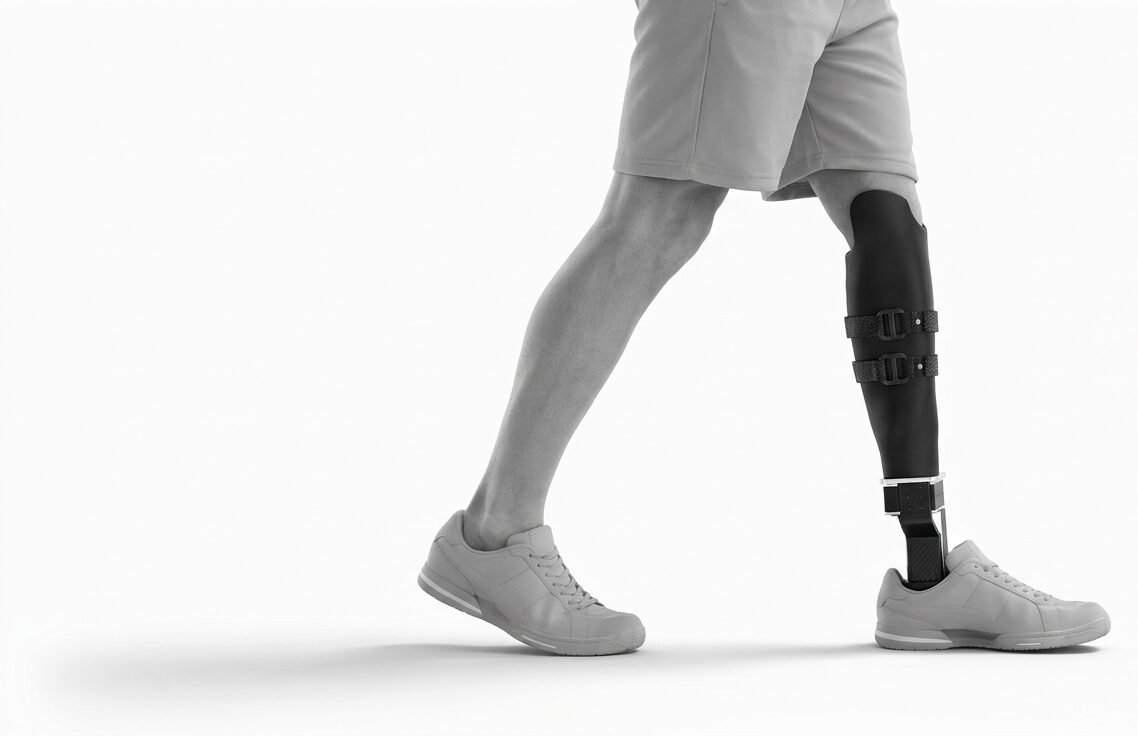
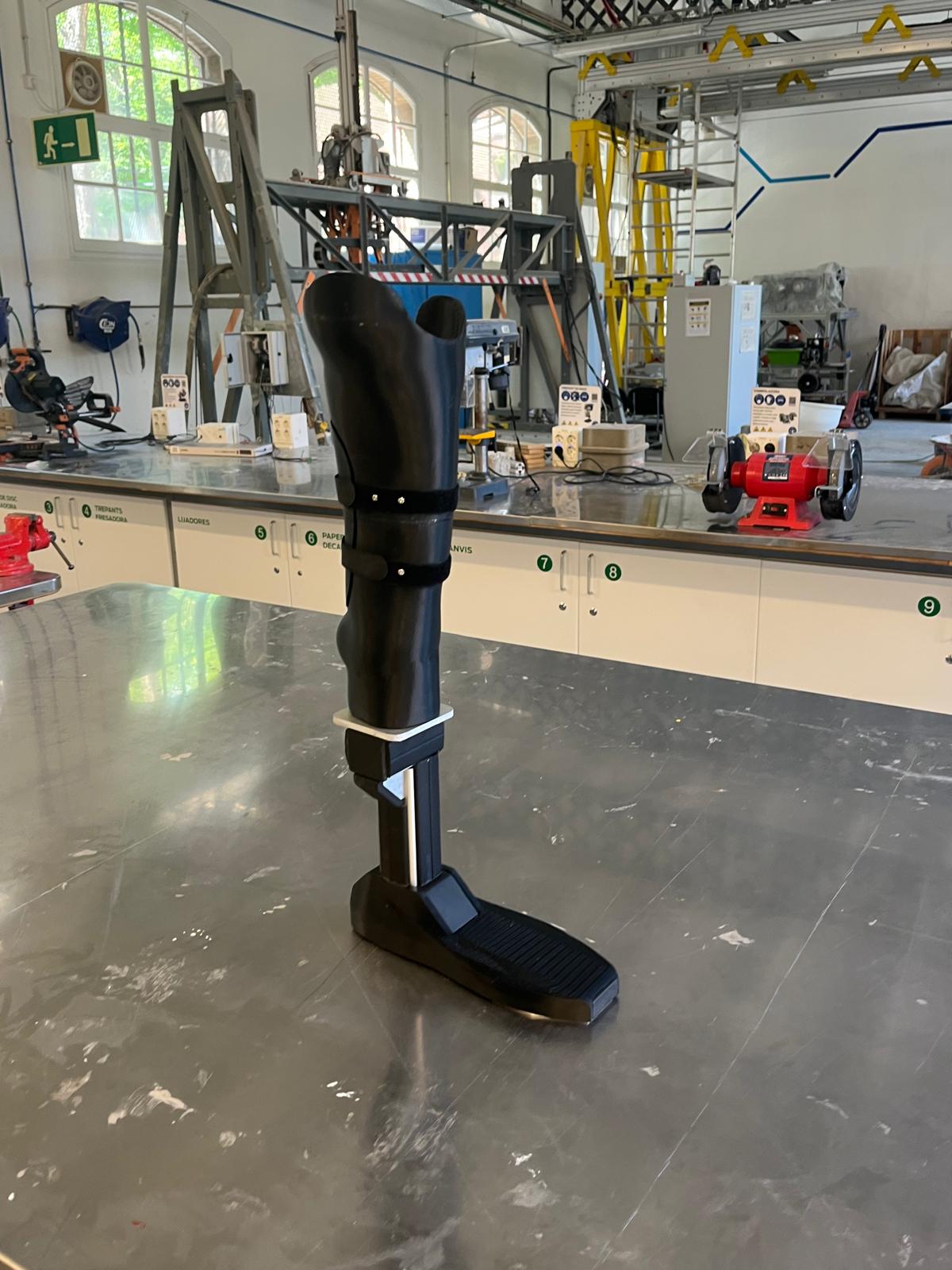
This transtibial prosthesis strikes a balance between technical performance and accessibility by combining off-the-shelf T-slot profile components with custom 3D-printed parts. The result is a lightweight, highly personalized system that offers horizontal alignment and an anatomical fit, thereby maximizing user comfort and load distribution. Thanks to its modular architecture, any part can be easily adjusted or replaced in the event of wear, avoiding the need to discard the entire assembly.
3d model
prototype






personal reflections
This project started from a real-life encounter. While working at a company, I met someone who wore a transtibial prosthesis. Chatting with him, it struck me how shockingly expensive commercial prostheses are, making them completely inaccessible for so many people. As an industrial design engineer—and with him being a daily user and expert on the product—we realized we had a unique opportunity to do something about it.
That conversation turned into a collaborative journey. Working side by side with him changed everything; I learned firsthand what a prosthesis truly needs day in and day out, what its weak points are, and which parts are the most challenging to design. By combining his expert feedback as a user with my technical background, we were able to develop a fully customized system tailored specifically to him.
This project became so much more than a design exercise—it was a daily learning process driven by empathy, shared knowledge, and the goal of making functional mobility a bit more accessible.